Data Ingestion: Moving Unstructured Content into Your Analytics Stack
Build a document data ingestion pipeline that turns PDFs, scans, and spreadsheets into validated, structured outputs for analytics, automation, and RAG.
Data ingestion is the end-to-end process of collecting information—files, streams, API payloads—and delivering it to a central store in a clean, consistent format. When the source material is dominated by PDFs, scans, and spreadsheets, an ingestion pipeline must work with scale.
Why It Matters in 2026
- Exploding volumes – Enterprises now receive billions of pages of contracts, claims, shipping forms, and lab reports each year.
- AI dependency – Retrieval-augmented generation (RAG) and real-time analytics need structured, trustworthy inputs.
- Regulatory scrutiny – Financial, healthcare, and privacy rules often require proof of how every data point was captured and validated.
A Typical Document-Centric Ingestion Flow
- Locate sources – Identify folders, S3 buckets, or URLs where documents appear
- Acquire documents – Upload directly or fetch with a pre-signed URL.
- Parse & transform – Run OCR, layout analysis, and field mapping; clean and normalise results.
- Validate – Check confidence scores, handle edge cases, route low-confidence records for review.
- Load – Deliver structured JSON to a warehouse, lake, message queue, or vector store.
- Monitor – Track accuracy, latency, and throughput; refine schemas as requirements evolve.
How Reducto Simplifies It
- One Upload Call – Store the file securely and receive a job ID, or plug in your own pre-signed URL
- Multi-Pass Parse – High-resolution OCR is followed by a vision-language correction pass that repairs low-confidence zones and understands dense tables.
- Schema-Aware Extract – Emit ready-to-use JSON with token-level confidence scores and bounding-box citations
- Async Webhooks – Your application is notified instantly when a job completes, allowing real-time or micro-batch processing without polling.
- Private-Cloud Option – Deploy the engine inside your own VPC to satisfy data-residency or PHI requirements.
Key Capabilities to Look For
- Scalability – Handle spikes of millions of pages without manual reconfiguration.
- Automation Hooks – Webhooks, SDKs, or event bridges that plug straight into existing workflows
- Security – Encryption, Zero Data Retention policies, or even on-premise deployments
- Data Quality Controls – Confidence scores, duplicate detection, and schema validation baked in.
- Auditability – Bounding-box citations and versioned schemas
Common Roadblocks & How Reducto Addresses Them
- Noisy scans or fax artifacts – Multi-pass systems re-check uncertain characters
- Layout complexity – Nested or spanning-cell tables are decoded with layout-aware transformers
- Latency constraints – Async jobs and webhooks push results as soon as they are ready, supporting micro-batch and streaming targets.
- Governance demands – Token-level confidence and citations simplify audits
Best-Practice Starter Plan
- Choose a high-impact document type—invoices, claims, bills of lading—to prove value quickly.
- Gather a representative sample—include pristine digital files and worst-case scans.
- Define the target schema—only the fields your downstream tools truly need.
- Test in the Reducto Studio—inspect accuracy, confidence scores, and citations without writing code.
- Automate with three API calls—upload, parse, extract—and send results to your data warehouse.
- Set confidence thresholds—route only low-confidence fields to human reviewers.
- Monitor & iterate—track precision/recall, add new edge cases, and evolve schemas as business rules change.
High-Value Use Cases
- Finance & Accounting – Parse invoices and receipts to automate three-way matching and accelerate close.
- Insurance – Ingest claims and policy packets, enabling straight-through adjudication.
- Healthcare – Convert lab results and EOBs into EMR-ready formats, reducing manual entry.
- Legal & Compliance – Extract clauses and key dates from contracts with bounding-box evidence for audits.
- Supply Chain – Capture data from bills of lading and customs forms to maintain real-time inventory visibility.
- AI & LLM Ops – Feed structured, citation-backed context into RAG pipelines, cutting hallucinations and boosting answer accuracy.
The Bottom Line
Effective data ingestion bridges the gap between raw documents and analytics-ready data. By collapsing upload, multi-pass parsing, and schema-aware extraction into three secure endpoints—while adding confidence metrics, citations, and private-cloud deployment options—Reducto lets teams spend their time on insights, not on stitching together document ingestion solutions.
More guides
Document Parsing: Turning Unstructured Files into Reliable, Structured Data
Learn how document parsing converts PDFs, scans, spreadsheets, and images into structured text and JSON for search, analytics, automation, and LLM workflows.
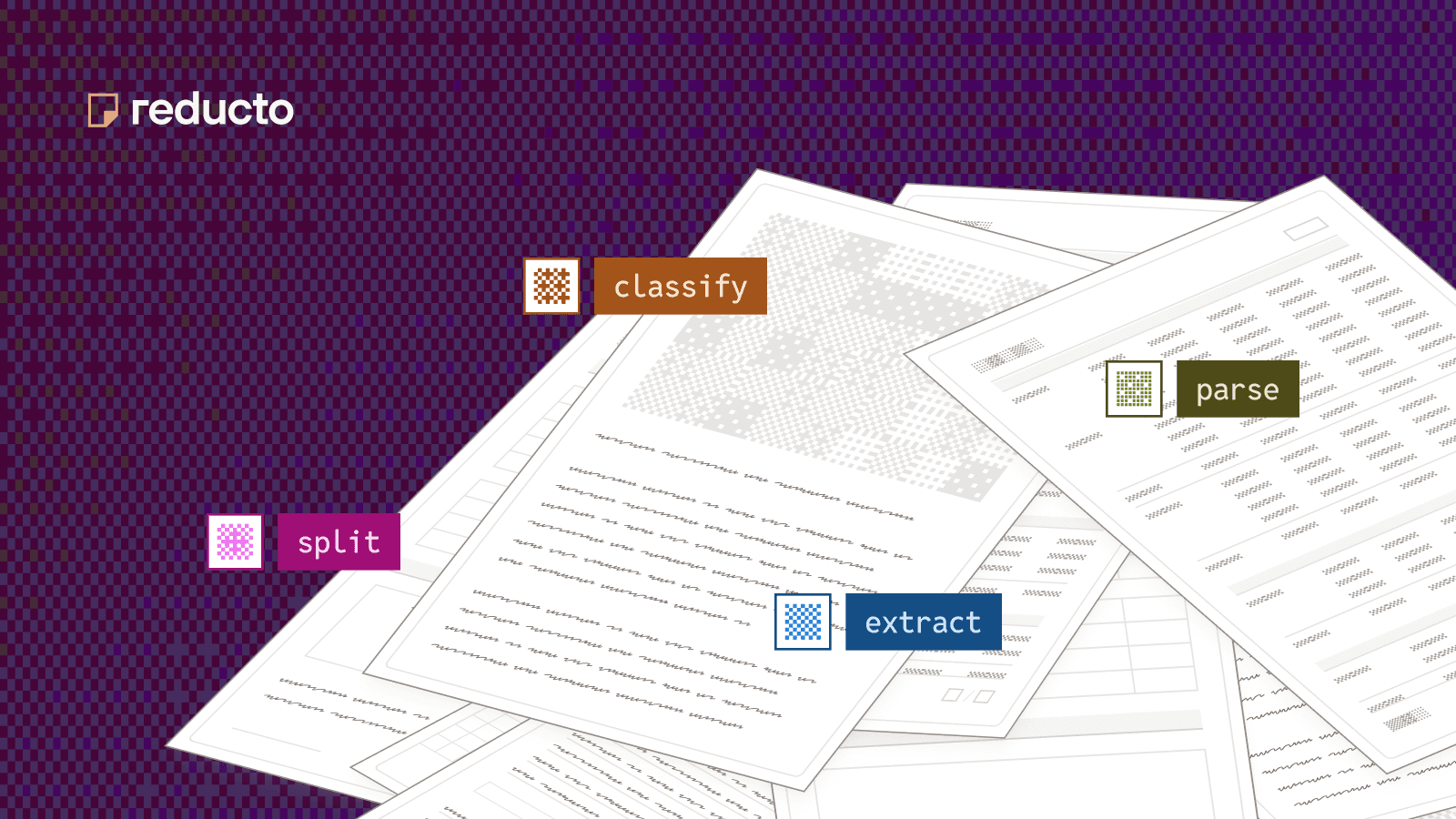
Best AI Data Extraction Tools for Unstructured Documents in 2026
Compare leading AI data extraction tools for complex PDFs, scans, forms and document packets using accuracy evidence, source traceability, review workflows, integrations and pricing models.
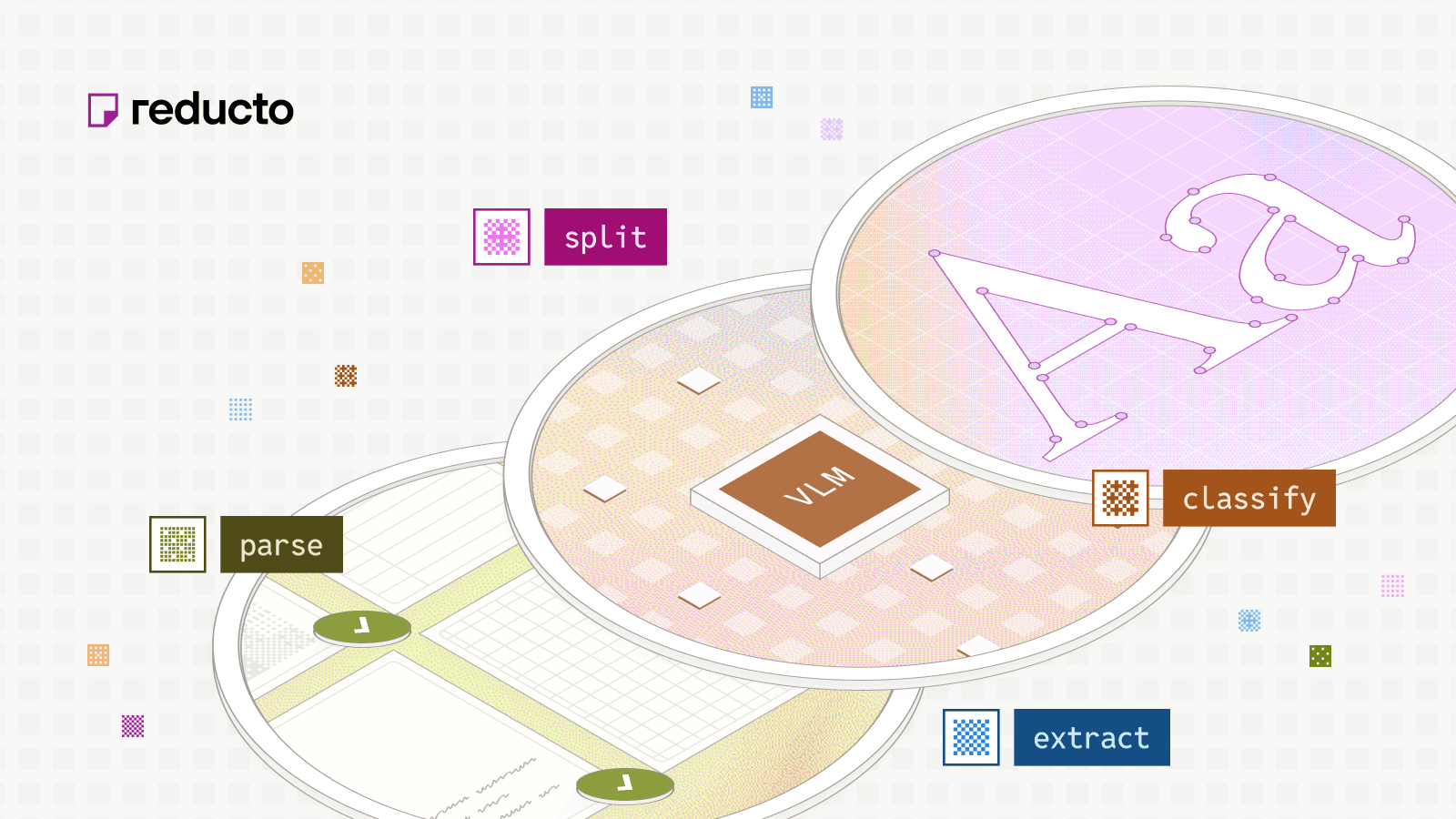
Spreadsheet Parsing: Extracting Reliable Data from Excel Files
Learn how to parse Excel workbooks with multiple tables, formulas, hidden content, and merged headers while preserving cell-level source evidence.